

-
.
Displaying items by tag: media training
Tuesday, 14 October 2025 08:07
The Evolution of Presenter Training: From TV Studios to Corporate Stages

Twelve years ago, when we founded The Presenter Studio as BAFTA Award-winning television producers, our mission was clear: train the next generation of TV presenters.
We'd spent years in television production, working with celebrity talent and creating broadcast content. We knew what made someone compelling on screen. We understood the specific skills that separated good presenters from great ones.
Our first clients were exactly who we expected: people with dreams of television careers. Aspiring presenters who wanted to break into broadcasting. Actors who needed stronger on-camera skills. People who'd been told they had "screen presence" and wanted to develop it professionally.
We loved this work. Television was our world, and we were passing on hard-won expertise from our BAFTA-winning production careers.
Then the industry started shifting beneath our feet.
The First Pivot: When TV Started Changing
Around 2015, we began noticing something concerning. The television industry—particularly traditional broadcasting—was contracting. Streaming was rising. YouTube was creating new types of presenters. The pathway into television presentation was becoming less clear.
Meanwhile, our phones started ringing with different types of calls.
"We saw your TV presenter training," a corporate communications director said. "Could you teach our executives those skills?"
Initially, we were hesitant. We were television professionals, not business trainers. Would our expertise even translate?
We decided to experiment. We brought a senior leadership team through a modified version of our TV presenter training—on-camera techniques, message clarity, vocal variety, purposeful movement.
The results surprised us. These executives weren't preparing for television, but the skills transformed how they presented to their boards and teams. One participant later told us: "I've been presenting for twenty years, but no one ever taught me these techniques. This changed everything."
We started to realize something important: the skills that make TV presenters effective aren't specific to television. They're fundamental communication skills that work everywhere.
Understanding the Problem
As we worked with more corporate clients, we identified the core issue they faced.
Business professionals are often brilliant strategists, subject matter experts, and decision-makers. They have important things to say. But they'd never been taught how to deliver those messages compellingly.
They'd learned public speaking in school (maybe), picked up some presentation tips from colleagues, and mostly just figured it out as they went along. The result? Competent but forgettable presentations. Information delivered but not remembered. Good ideas that didn't get buy-in because the delivery didn't match the quality of the thinking.
Meanwhile, TV presenters receive extensive training in exactly these skills. They learn how to structure messages for impact, use their voice as an instrument, command attention, handle pressure, and connect with audiences.
Why shouldn't business professionals have access to that same expertise?
The Second Wave: Video Becomes Unavoidable
Around 2018-2020, video communication exploded in business. What had been occasional conference calls became daily video meetings. What had been rare media interviews became regular social media presence.
Suddenly, every executive was on camera constantly—but almost none of them had on-camera training.
This is when we saw the real value of our television production background. We'd spent years understanding what works on screen versus in person. We knew the specific adjustments people need to make for camera presence. We understood lighting, framing, energy projection through a lens, and where to direct your gaze.
These weren't abstract concepts from our TV days—they were immediately practical skills that every professional needed.
Our corporate training evolved again. Now we weren't just teaching presentation skills. We were teaching broadcast-level on-camera performance for business contexts.
What We Kept from Our TV Roots
As we evolved from training TV presenters to training business professionals, we realized certain elements of our approach were universally valuable:
High Standards In television production, there's no room for "pretty good." Content either works or it doesn't. We brought those same standards to corporate training. We don't accept mediocre presentations just because someone is "not naturally a presenter." We expect excellence because we know it's achievable.
Specificity TV training is concrete. "Make eye contact with the camera lens for three seconds." "Pause for two beats after your key message." "Lower your vocal pitch at the end of statements." We don't deal in vague advice like "be more confident." We teach specific, actionable techniques.
Practice Under Realistic Pressure TV presenters don't just talk about performing under pressure—they practice it repeatedly. We brought this same approach to corporate training. Our clients present on camera, get feedback, and present again. They practice recovery when things go wrong. They build muscle memory for techniques.
Focus on Authenticity The best TV presenters aren't performers in the theatrical sense. They're authentically themselves, just optimized. We never try to turn people into something they're not. We help them become the most effective version of themselves.
What We Added for Corporate Clients
Working with business professionals also taught us new elements that now define our approach:
Business Context Understanding We had to learn the specific scenarios our clients face. Board presentations operate differently than investor pitches. Team meetings require different skills than media interviews. We studied business communication the way we once studied television formats.
Integration with Business Strategy Unlike aspiring TV presenters who needed general skills, executives needed presentation training that supported specific business objectives. We learned to connect communication skills with strategic outcomes.
Scalability Television typically trains individuals. Businesses needed us to train teams, develop internal capability, and create lasting change across organizations. We built programs that could scale while maintaining quality.
Measurement of Impact Business clients rightfully asked: "What's the ROI?" We developed ways to measure improvement and connect presentation skills to business results—something we'd never needed to do in television.
Where We Are Now
Today, The Presenter Studio serves primarily corporate clients, but our identity remains rooted in our television production heritage. We're still BAFTA Award-winning producers who've worked with celebrities and created broadcast content.
That background is our competitive advantage.
When we teach an executive how to handle difficult questions, we're drawing on years of managing celebrity interviews and media incidents. When we coach someone on on-camera presence, we're applying techniques refined through countless hours of television production. When we help someone tell a compelling story, we're using narrative principles from our BAFTA-winning work.
We're not business consultants who added presentation training to their services. We're television professionals who discovered that broadcast-level communication skills are exactly what business leaders need.
The Unexpected Benefit of Our Evolution
Here's something we didn't anticipate: working with corporate clients made us better at what we do.
In television, you can succeed with strong technical skills. But in business, we had to deeply understand why these techniques work. We had to be able to explain the psychology of attention, the neuroscience of storytelling, and the mechanics of credibility.
Teaching executives—many of them skeptical about "presentation training"—forced us to become more precise, more practical, and more results-focused.
Now when we do train aspiring TV presenters (we still work with some), we're actually better at it than we were twelve years ago because we understand the underlying principles more deeply.
What the Next Twelve Years Might Hold
We're now watching new shifts in how people communicate. Virtual reality presentations. AI-generated content. New platforms we can't yet imagine.
But we've learned something important from our journey: the fundamentals of effective human communication remain constant even as mediums change.
Whether you're presenting on television, in a boardroom, on a video call, or in whatever medium emerges next, you still need to:
- Capture and hold attention
- Deliver messages clearly
- Connect authentically
- Project credibility
- Handle pressure gracefully
- Tell compelling stories
These skills transcend any specific platform. They're human skills, not technical skills.
That's why we're confident The Presenter Studio will remain relevant regardless of how communication technology evolves. We teach fundamentals that have been valuable for as long as humans have been communicating, refined through the demanding standards of professional television production.
The Bottom Line
We didn't plan to evolve from TV presenter training to corporate presentation skills. The market pulled us in this direction because business professionals recognized the value of broadcast-level communication training.
Looking back, we're grateful for how things unfolded. We get to use our BAFTA-winning television production expertise to create real business impact. We help executives become more effective leaders, companies communicate more powerfully, and professionals advance their careers.
We're still television people at heart. We still think like producers, train like we're preparing someone for broadcast, and maintain the high standards that won us awards.
But now we apply that expertise where it can make the biggest difference: helping business professionals communicate with the same skill and impact as the best television presenters.
And honestly? That feels like exactly the right evolution.
The Presenter Studio brings 12 years of evolution and BAFTA-winning television expertise to corporate presentation training. Discover how broadcast-level skills can transform your business communications.
Published in
News
Tagged under
Tuesday, 14 October 2025 07:57
Why TV Presenter Skills Matter in the Boardroom

When we founded The Presenter Studio 12 years ago as BAFTA Award-winning television producers, our focus was training aspiring TV presenters. We taught autocue reading, camera presence, and broadcast delivery techniques.
Then something interesting happened. Corporate executives started approaching us.
"Can you teach us what you teach TV presenters?" they'd ask. "We need to present to boards, investors, and large teams. We need to be as compelling as people on television."
Initially, we weren't sure our TV expertise would translate. We were wrong. It translates perfectly. Here's why television presenter skills have become essential for business success.
The Attention Economy Hit Business Hard
Television presenters have always competed for attention. Change the channel and they're gone. They learned to be compelling within seconds or lose their audience.
Now business presenters face the same challenge. Your board members have phones buzzing with notifications. Your team is on video calls with email open in another window. Your investors are evaluating multiple opportunities simultaneously.
The skills TV professionals use to capture and hold attention—strong openings, strategic pauses, vocal variety, purposeful movement—aren't just nice to have anymore. They're essential for ensuring your message even gets heard.
Video Is Now the Default Communication Medium
Remember when "presenting" meant standing in a conference room with slides? Those days are gone.
Now you're on Zoom calls, recording video messages, appearing in company broadcasts, and maybe even doing media interviews or conference speaking. You're on camera constantly—just like a TV presenter.
Yet most businesspeople never learned on-camera skills. They don't know where to look, how to frame themselves, or how to project energy through a lens. TV presenters master these skills as fundamentals. Business professionals need them just as urgently.
Through our work at The Presenter Studio, we've seen countless executives transform their video presence by applying simple broadcast techniques—proper camera positioning, energy projection, and the specific eye contact patterns that work on screen versus in person.
Authenticity Has Become a Competitive Advantage
Here's an interesting paradox: TV presenters are trained performers, yet the best ones seem completely authentic. How?
They've learned to be genuinely themselves while optimizing their delivery. They know how to eliminate distracting habits without becoming robotic. They understand how to project their authentic personality in a way that translates through cameras and reaches audiences.
Business leaders face the same challenge. Stakeholders are sophisticated. They can spot inauthentic corporate speak immediately. Yet completely unrehearsed presentations often ramble or miss key messages.
The solution? The TV presenter's approach: deep preparation that allows for authentic delivery. Know your message so thoroughly that you can deliver it conversationally. This is exactly what we teach in our corporate presentation training.
Storytelling Has Moved from "Nice to Have" to "Must Have"
Television professionals understand something fundamental: facts alone don't persuade. Stories do.
A TV documentary doesn't just present information. It takes you on a narrative journey with tension, resolution, and emotional connection. This isn't manipulation—it's how human brains process and remember information.
Business presentations increasingly require the same approach. Investment pitches need narrative arc. Change management communication needs emotional resonance. Strategy presentations need to take audiences on a journey.
We've worked with CEOs who had brilliant strategies but couldn't get buy-in. The problem wasn't their thinking—it was their presentation. Once we applied storytelling techniques from our BAFTA-winning television production background, those same strategies suddenly became compelling. The content hadn't changed. The delivery had.
Recovery Under Pressure Is a Daily Requirement
TV presenters work with the knowledge that anything can go wrong—teleprompters fail, guests don't show up, technical issues arise—and they must handle it gracefully while maintaining credibility.
Business leaders face similar pressures. A key slide doesn't load. Someone asks a hostile question. The presentation time gets cut in half. A crisis emerges mid-meeting.
The executives who handle these moments well share something with professional broadcasters: they've trained for recovery. They have techniques for maintaining composure, pivoting smoothly, and turning problems into opportunities to demonstrate competence.
This is why we incorporate "crisis scenarios" into our corporate training. We learned from years of television production that you can't train someone to "stay calm under pressure" with advice alone. You need to create realistic pressure situations and practice recovery techniques until they become automatic.
Personal Brand Now Matters for Everyone
TV presenters have always understood that they are their brand. Their credibility, trustworthiness, and likability directly impact their career success.
This reality has now extended to business professionals. Your presentation style shapes how you're perceived as a leader. Your video presence influences whether people trust your judgment. Your ability to communicate vision determines whether teams follow you.
We've seen talented executives plateau in their careers not because they lack strategic thinking, but because they lack presentation skills. They're perceived as less confident, less visionary, or less credible than they actually are—simply because they never learned on-camera techniques.
Meanwhile, others accelerate their careers by mastering these skills. They're the same person with the same capabilities, but now they're perceived differently because they present differently.
The Skills Are Learnable (Not Innate)
Here's the most important thing we've learned training both TV presenters and business professionals over 12 years: these skills are completely teachable.
People assume TV presenters are naturally charismatic or comfortable on camera. They're not. They've been trained in specific techniques—where to look, how to modulate their voice, how to use gestures purposefully, how to structure content for impact.
When we teach these same techniques to executives, they develop the same capabilities. The CFO who seemed stiff becomes compelling. The technical director who rambled becomes clear and concise. The CEO who struggled with credibility starts commanding rooms.
The difference between an effective presenter and an ineffective one isn't talent. It's training.
What This Means for Your Organization
If your business requires people to present - to boards, investors, clients, teams, or the public - then TV presenter skills are no longer optional professional development. They're core business skills.
The executives who present well get buy-in for their ideas. They inspire their teams. They represent your organization credibly. They advance their careers and contribute to organizational success.
Those who present poorly - even if they're brilliant strategists - struggle to get ideas heard, teams engaged, or stakeholders convinced.
At The Presenter Studio, we've built our entire methodology around translating professional broadcast techniques into practical business applications. We know these skills matter because we've seen the career and organizational impact when people master them.
The Bottom Line
The lines between television presentation and business presentation have dissolved. You're on camera regularly. You compete for attention constantly. You need to be authentic, compelling, and credible under pressure.
These were always requirements for TV presenters. Now they're requirements for business success.
The good news? Everything TV professionals know about effective presentation is learnable. You don't need natural charisma or performance background. You need the right training from people who understand both broadcast excellence and business context.
That's exactly what we provide.
Ready to bring television-level presentation skills to your business? The Presenter Studio's BAFTA-winning team specializes in translating broadcast techniques into corporate impact.
Published in
News
Monday, 13 October 2025 21:21
Media Training for Business Leaders: How to Shine on Camera and Off
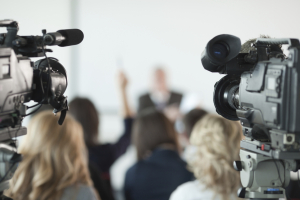
Media exposure is no longer the reserve of celebrities; business leaders must communicate effectively to shape perception and drive results.
Media training equips leaders to protect their brand, enhance credibility, and present with confidence in both public and virtual settings.
Key skills include handling difficult questions, speaking concisely and clearly, engaging audiences through storytelling, and mastering non-verbal communication.
Leaders should practice key messages, maintain eye contact with interviewers, and ensure that their delivery reflects both authority and authenticity.
With the right training, executives can navigate interviews, presentations, and on-camera appearances with confidence.
The Presenter Studio offers media training specifically designed for business leaders to build credibility and presence in all communication settings.
Published in
News
Tagged under
Thursday, 18 September 2025 08:19
How Media Training Prepares You for Tough Interviews

One of the hardest parts of dealing with the media is handling tough or unexpected questions in interviews. Even the most experienced professionals can be caught off guard. Media training equips you with the techniques to stay composed and in control.
You’ll learn bridging strategies to guide the conversation back to your key messages, without sounding evasive. Training also helps you develop concise soundbites — short, memorable answers that resonate with audiences and are more likely to be quoted.
Perhaps most importantly, media training builds resilience. Instead of fearing challenging interviews, you’ll see them as opportunities to demonstrate authority and transparency. When you know how to prepare, you’ll never be left speechless.
For professional guidance, visit: https://www.presenterstudio.com/business-presenter-training/media-training
Published in
News
Tagged under
Thursday, 18 September 2025 08:18
The Top Benefits of Media Training for Your Career

Media appearances are opportunities — not just to inform, but to inspire trust and build your profile. Yet many professionals fear interviews because they don’t know how to prepare. This is where media training comes in.
One of the biggest benefits is learning how to simplify complex information. Journalists and audiences want clarity, and media training helps you strip away jargon so your message lands. Another advantage is learning how to stay on track, even if the interviewer tries to push you in a different direction.
Confidence is another outcome. With practice in front of the camera, you’ll learn to project authority and remain calm, even when the pressure is high. These skills don’t just help in interviews — they carry over into presentations, boardrooms, and everyday communication.
To learn more, visit: https://www.presenterstudio.com/business-presenter-training/media-training
Published in
News
Tagged under
Thursday, 18 September 2025 08:16
Why Media Training is Essential for Professionals

In today’s fast-paced media landscape, knowing how to communicate effectively on camera or in interviews is more important than ever. Whether you’re a business leader, spokesperson, or expert in your field, your ability to handle the media can shape your reputation.
Media training helps you master key skills, such as controlling your message, handling difficult questions, and speaking with confidence under pressure. It also teaches you how to look natural on camera and use body language to reinforce your words.
Without proper preparation, even the most knowledgeable professionals can appear nervous, evasive, or unconvincing. That’s why organisations invest in media training to protect their brand and ensure their people make a strong impression.
For more information on professional training, visit: https://www.presenterstudio.com/business-presenter-training/media-training
Published in
News
Tagged under
Thursday, 11 September 2025 09:29
How Media Training Prepares You For Tough Questions

Difficult questions are inevitable in interviews, but how you respond defines your credibility. Media training prepares you to deal with these moments calmly and effectively. One strategy is to pause briefly before answering. This prevents rushed responses and gives you a chance to choose words carefully. Another technique is to acknowledge the question while steering towards your key message. For example, you can address concerns directly but then explain the positive actions your business is taking. Training also helps you avoid common pitfalls such as speculation, jargon, or defensive reactions. Practising under pressure makes it easier to stay composed when cameras are rolling. Most importantly, media training shows you how to remain authentic, so your responses build trust rather than raise suspicion. These skills are essential for protecting your reputation and turning a challenging moment into an opportunity.
For tailored training programmes that prepare you for every interview visit https://www.presenterstudio.com/business-presenter-training/media-training
Published in
News
Tagged under
Thursday, 11 September 2025 09:27
Top Tips You Learn From Media Training

Media training is full of practical tools that you can use immediately. One of the first tips is to always keep your answers short and clear. Long-winded responses can easily be edited or misinterpreted, while concise soundbites get quoted. Another tip is to bridge back to your main message. Journalists may ask difficult questions, but you can still find a way to guide the conversation towards the key point you want to land. A third tip is to control your body language. Sit or stand tall, use open gestures, and maintain steady eye contact. Another valuable tip is to practise under realistic conditions. Training often includes mock interviews which simulate real pressure, helping you build confidence. Finally, remember to be authentic. Audiences respond to honesty and personality, not robotic or rehearsed answers. Media training gives you the space to practise and refine these skills until they feel natural.
For expert coaching in handling the media visit https://www.presenterstudio.com/business-presenter-training/media-training
Published in
News
Tagged under
Thursday, 11 September 2025 09:22
Why Media Training Is Essential For Business Leaders

In today’s fast-moving media landscape, interviews and press opportunities can make or break a reputation. Media training equips business leaders with the skills to handle these situations with confidence. It is not enough to know your subject matter. You also need to know how to deliver your message in a way that is clear, concise, and memorable. Media training teaches you to stay on message even under pressure, to respond to difficult questions with authority, and to project credibility in every appearance. The ability to manage tone, body language, and soundbites ensures that your audience remembers the key points you want to highlight rather than being distracted by nerves or missteps. For leaders looking to strengthen their brand and protect their organisation’s reputation, media training has become an essential tool rather than a luxury.
For more information on professional coaching visit https://www.presenterstudio.com/business-presenter-training/media-training
Published in
News
Tagged under
Tuesday, 12 August 2025 06:41
Media Training: Balancing Warmth and Authority – The Presenter Studio

One of the most challenging skills to master in media training is finding the right balance between warmth and authority. Lean too far into authority and you risk sounding cold, unapproachable, and overly corporate. Focus only on warmth and you might come across as lacking in credibility or gravitas. The art lies in blending the two so they work together.
Audiences want to feel reassured that you know your subject — but they also want to feel a human connection. Authority gives you trust; warmth keeps people engaged. In presenting, these qualities are not opposites. In fact, the best communicators make them inseparable.
Think of an experienced news anchor. They speak with the weight of knowledge and the assurance of experience, yet they deliver their words with empathy. They are confident without arrogance, friendly without being casual to the point of losing professionalism.
Achieving this balance starts with self-awareness. Media training helps you identify whether your natural style leans more towards warmth or authority. Once you know this, you can develop the complementary side. If you’re naturally warm, you can work on tightening your structure and boosting your vocal power. If authority is your strength, you can bring in more openness, conversational language, and visual engagement.
The goal is to create a style where the audience feels both guided and welcomed. When warmth and authority work in harmony, your message not only lands — it sticks.
https://www.presenterstudio.com/business-presenter-training/media-training
Published in
News
Tagged under